
Cost Guides
Adding a Bathroom to Your Basement on Long Island: Costs, Permits & What to Expect
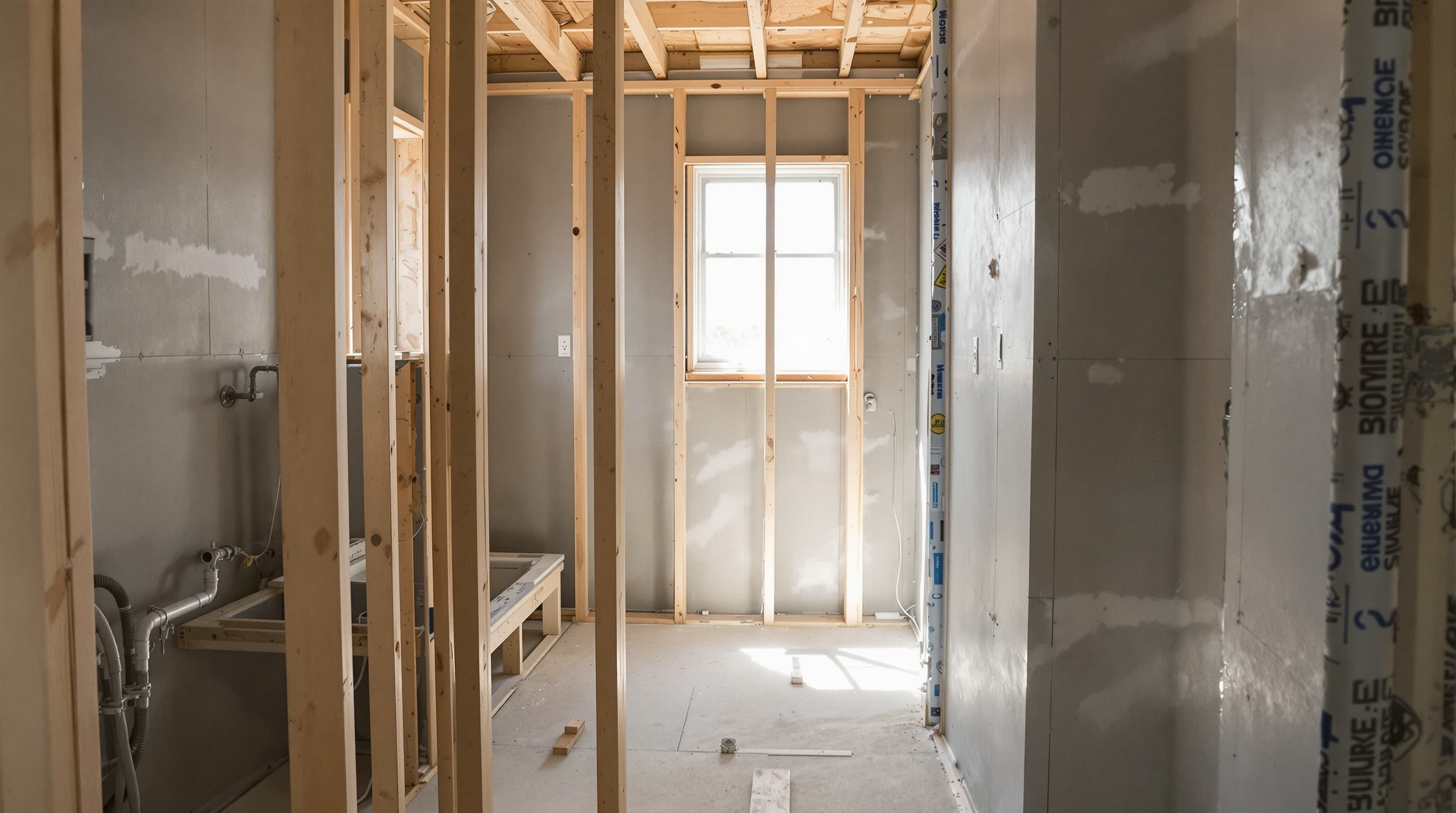
Adding a bathroom to a Long Island basement is one of the most practical improvements a homeowner can make — it converts square footage that's already there into fully usable space. But it's also one of the more involved remodel types: concrete demo, drain rough-in, waterproofing, permits, and in many cases, a decision about upflush vs. gravity plumbing that has long-term implications.
This guide is written for Nassau and Suffolk County homeowners specifically. We cover how the process actually works, what it realistically costs in 2026, which permit departments you're dealing with, and the Long Island-specific issues — cesspools, flat-grade neighborhoods, old cast-iron stacks — that come up on nearly every basement bathroom job we do.
Upflush vs. Gravity Drain: The First Decision
Before anything else, your contractor needs to determine whether your basement can support a gravity-drain bathroom or requires an upflush system. This decision drives a significant portion of the cost difference between a $10,000 and a $30,000 basement bathroom.
Gravity drainmeans cutting the concrete basement floor, digging a trench to the existing drain stack or main sewer lateral, and installing drain lines that slope toward the main. The toilet, shower, and sink all drain by gravity. This is the durable, permanent solution — no moving parts, no electricity required, no pump maintenance. It's also the more expensive approach upfront: concrete cutting, trenching, new PVC drain installation, and concrete patch typically run $3,500–$8,000 before any bathroom fixtures are installed.
Upflush systems(Saniflo is the most recognized brand, but Zoeller, Liberty, and others are available) use a macerating pump that grinds waste and pumps it up through a 1.5" discharge line to the main stack above. The toilet and fixtures drain into the unit; the unit does the rest. Installation is faster, does not require concrete work, and typically runs $1,800–$3,500 for the unit plus installation labor.
When is upflush the right call? When the basement floor sits at or near the same elevation as the main sewer line outside — a common situation in flat-grade Nassau County neighborhoods like Levittown, Wantagh, Merrick, and parts of Hempstead. In these locations, cutting the floor and trying to gravity-drain to a line that sits at the same grade doesn't work. Upflush is not a second-choice option; it's the correct answer for that situation.
When is gravity the right call? When your basement floor is meaningfully below the sewer line — typical in homes with deeper basements in Smithtown, Dix Hills, Commack, and many Suffolk County ranch-on-slab homes where the basement is a true below-grade space. Here, gravity drain is technically achievable and the durability advantage over a mechanical system makes it the right long-term investment.
Nassau County Basement Bathroom: Permit Requirements
Nassau County does not have a unified building department. Permits for basement bathrooms are issued by the individual village or town:
| Area | Permit Authority | Approx. Permit Fee |
|---|---|---|
| Garden City, Floral Park, Valley Stream, Rockville Centre | Incorporated village building dept | $350–$900 (varies by village) |
| Unincorporated Nassau (Levittown, Massapequa, Wantagh) | Nassau County DPW | $250–$500 |
| Great Neck, Manhasset, Port Washington | Village building dept | $400–$800 |
| Long Beach, Freeport, Hempstead (cities/villages) | City/village building dept | $300–$700 |
We pull every permit as part of our scope and manage the inspection schedule — plumbing rough-in inspection, electrical rough-in inspection, and final building inspection are all typically required for a basement bathroom addition. In Nassau County, expect 5–15 business days from permit application to approval, depending on village workload.
Suffolk County Basement Bathroom: Permit Requirements
Suffolk County permits are issued by the five towns — Islip, Huntington, Babylon, Smithtown, and Brookhaven — rather than the county. This is simpler in one respect (no village-level filings) but means the specific requirements and fee schedules vary by town.
One Suffolk-specific issue that affects many basement bathroom projects: cesspool and septic systems. A large share of Suffolk County homes outside of western Suffolk are on cesspools rather than municipal sewer. Adding a bathroom increases hydraulic load. For homes where the cesspool is already aging or undersized, the Town of Islip, Town of Brookhaven, and others may require a cesspool inspection before approving the bathroom permit. We flag this at the estimate stage — better to know before demo than to discover it mid-project.
What the Process Looks Like, Step by Step
Here is how a typical gravity-drain basement bathroom addition on Long Island runs from first call to final inspection:
- On-site assessment. We inspect the existing basement — ceiling height, stack location, floor elevation vs. sewer grade, electrical panel capacity, and the intended layout. This is where the upflush vs. gravity decision gets made definitively.
- Design + permit filing. We file the permit with drawings showing drain layout, fixture rough-in locations, and electrical plan. Typical Nassau County village approval: 5–15 business days. Typical Suffolk town approval: 5–10 business days.
- Concrete saw-cut and trench (gravity systems only). We use a diamond-blade concrete saw to cut the floor along the planned drain route, dig the trench, and install PVC drain lines sloped to the main. This typically takes 1–2 days. The trench is then backfilled and the slab patched with hydraulic cement and finish concrete. Cure time before flooring: 72 hours minimum, 5–7 days before heavy foot traffic.
- Framing. If a new partition wall is needed to enclose the bathroom — common when carving a bathroom out of an open basement — we frame using pressure-treated lumber for bottom plates in contact with concrete.
- Plumbing + electrical rough-in. Rough-in is inspected before any walls are closed. Your inspector comes out to verify drain slope, trap locations, and electrical GFCI placement.
- Waterproofing. Any shower wet area is waterproofed using a membrane system before tile. We use Schluter Kerdi on every shower — the same engineered waterproofing system we use on above-grade bathrooms.
- Tile, fixtures, finish trim. Tile installation, then fixture set (toilet, vanity, shower fixtures), then finish trim. Final walk-through with you before we call for final inspection.
- Final inspection and CO. Building department final, plumbing final, and electrical final. Once all pass, you receive your certificate of completion.
2026 Cost Ranges for Basement Bathroom Additions on Long Island
| Scope | Nassau County | Suffolk County |
|---|---|---|
| Half-bath (toilet + sink, upflush) | $9,000–$16,000 | $8,000–$14,000 |
| Half-bath (toilet + sink, gravity drain) | $14,000–$22,000 | $12,000–$19,000 |
| Full bath (toilet + sink + shower, upflush) | $20,000–$32,000 | $18,000–$28,000 |
| Full bath (toilet + sink + shower, gravity drain) | $26,000–$42,000 | $22,000–$36,000 |
| Permit fees (included in our quotes) | $350–$900 Nassau | $150–$425 Suffolk |
These ranges assume a standard-complexity basement — accessible concrete, existing electrical panel with capacity, no asbestos in the floor or existing drywall, and no cesspool capacity issues in Suffolk County. Finished basements with existing drywall that needs removal add cost. Homes with original knob-and-tube wiring that requires panel work add cost. We note every variable at the estimate stage so there are no surprises mid-project.
The Long Island Details That Matter
A few specific things that come up repeatedly on Long Island basement bathroom jobs:
Old cast-iron stacks. Pre-1970 Long Island homes often have cast-iron main drain stacks. These are durable, but connecting PVC basement drain lines to cast iron requires specific fittings and, in some cases, a cast-iron collar repair if the existing stack has rotted at grade. We inspect the existing stack before finalizing any drain rough-in scope.
Low basement ceilings. Many Nassau County ranch-style homes and Cape Cods have basement headroom of 7 feet or less after mechanical systems. A shower enclosure in a low-ceiling basement needs careful layout — shower height, door clearance, and light fixture placement all have to account for the reduced headroom. We lay this out on-site before finalizing the bathroom location.
Egress compliance. Adding a bathroom to a finished basement does not require a new egress window. But if the basement bathroom addition is part of a broader basement finish that you intend to use as a bedroom, sleeping area, or legal dwelling unit, egress requirements kick in. Know the distinction before you plan.
Radon mitigation systems. Some Long Island homes — particularly in the geological zones in Suffolk County — have sub-slab radon mitigation systems already in place. Cutting concrete for drain rough-in can disturb these systems. We confirm radon system layout before any saw-cutting to avoid disrupting the mitigation piping.
Frequently Asked Questions
How much does it cost to add a bathroom to a basement on Long Island?
Adding a half-bath (toilet + sink) to a Long Island basement typically runs $8,000–$18,000. A full bath (toilet + sink + shower) with a properly waterproofed wet area typically runs $18,000–$38,000. Costs vary based on whether you need upflush plumbing or gravity drain rough-in, existing electrical panel capacity, ceiling height and access, and the extent of existing concrete demo required. Nassau County jobs typically run 8–12% above Suffolk for equivalent scope due to higher permit and labor costs.
Do I need a permit to add a basement bathroom on Long Island?
Yes, always. Any work that adds a bathroom — new drain lines, new electrical circuit for GFCI outlets, plumbing fixtures — requires a building permit in both Nassau and Suffolk County. Nassau County villages issue permits independently, so the permitting authority depends on which village or town you are in. In Suffolk County, permits are pulled from the individual town building departments (Islip, Huntington, Babylon, Smithtown, Brookhaven). We pull all permits and manage every inspection as part of our quoted scope.
What is an upflush toilet and when do I need one for a Long Island basement?
An upflush toilet (most commonly a Saniflo or similar macerating system) grinds waste and pumps it up and out through a small-diameter pipe to your main drain stack, rather than relying on gravity. You need one when your basement floor drain is below the municipal sewer line — common in many Nassau County flat-grade neighborhoods like Levittown, Wantagh, and Merrick where the sewer sits at or near the same grade as the basement floor. Upflush systems cost $1,800–$3,500 for the unit plus installation. Gravity rough-in through concrete costs $3,500–$8,000+ but lasts indefinitely and does not require electrical power to function.
How does a cesspool or septic system affect a basement bathroom addition in Suffolk County?
Many Suffolk County homes — particularly in Brookhaven, eastern Islip, Smithtown, and Huntington — are on cesspools rather than municipal sewer. Adding a bathroom increases hydraulic load on the cesspool. Suffolk County DEC recommends a cesspool capacity assessment before any plumbing addition. We specify WaterSense 1.28 gpf toilets and 1.75 gpm showerheads on all septic-connected basement bathrooms to minimize added load. For homes with undersized or failing cesspools, a bathroom addition may trigger a cesspool upgrade requirement from the building department.
How long does a basement bathroom addition take on Long Island?
Plan for 4–7 weeks from permit pull to final inspection. Concrete saw-cutting and drain rough-in take 2–3 days. Concrete patch cure time adds 3–5 days before framing can begin. Framing, plumbing rough-in, and electrical rough-in typically take 1 week. After rough-in inspection, waterproofing and tile work take 1–2 weeks depending on wet area size. Fixture set and finish trim take 1–2 days. Nassau County villages often add 5–10 business days for inspection scheduling vs. Suffolk County towns.
Do basement bathrooms add resale value on Long Island?
Yes, meaningfully. NAR data consistently shows bathroom additions have 60–70% cost recovery at resale nationally. On Long Island specifically — where finished basements are highly sought after in Nassau County colonials and Suffolk County ranches — a basement full bath can convert an unfinished basement into functional living space and meaningfully improve offers received. The highest-return scenario: a finished basement with a full bath in a neighborhood where comparable homes lack this feature. Our clients in Massapequa, Huntington, and Commack report the addition being specifically called out by buyers.
Get your project started
Ready for a real quote?
We'll walk your bathroom and send an itemized firm quote within 48 hours. No high pressure. No ballparks.